Villa Nouvelle Vague
A serene coastal haven
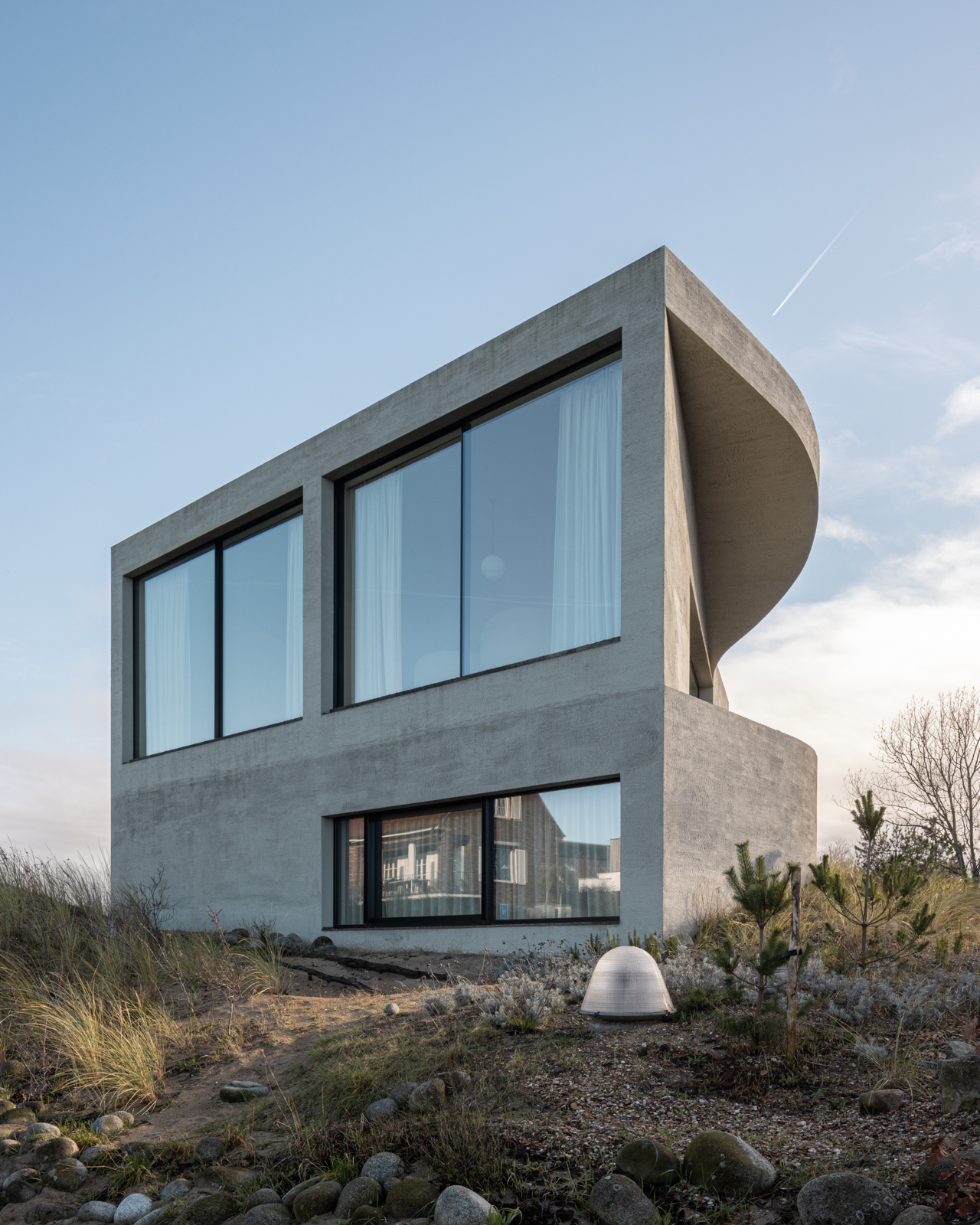
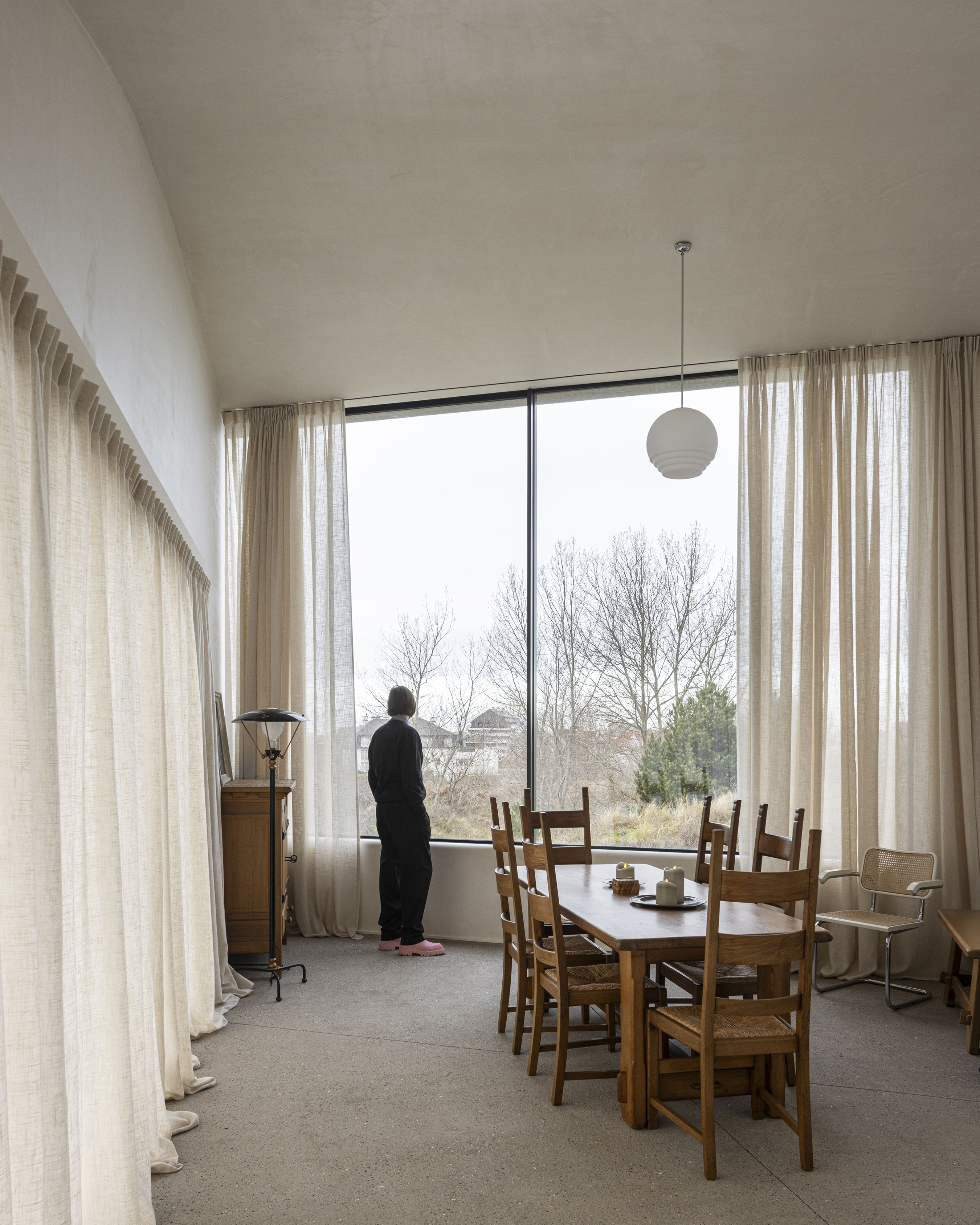
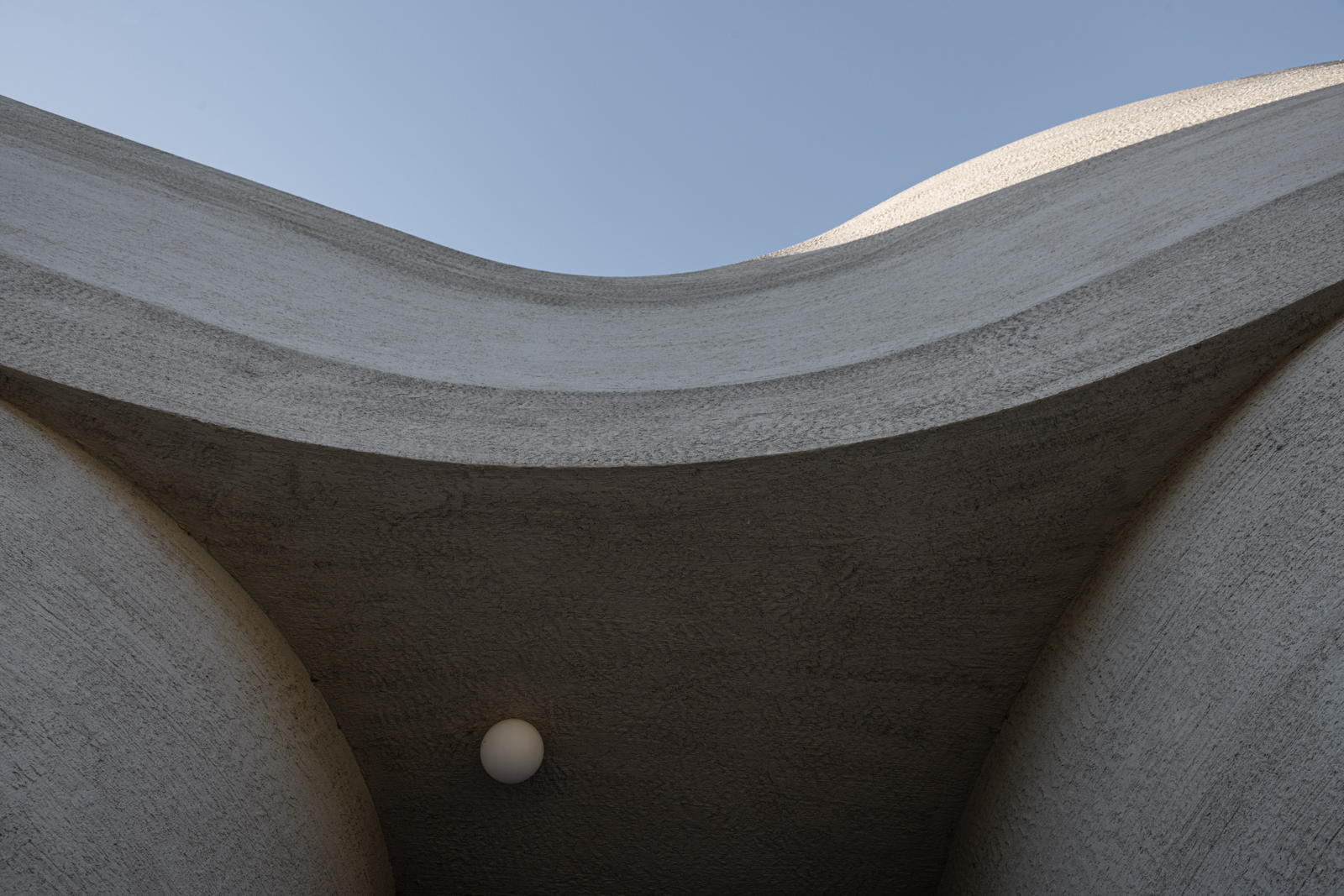
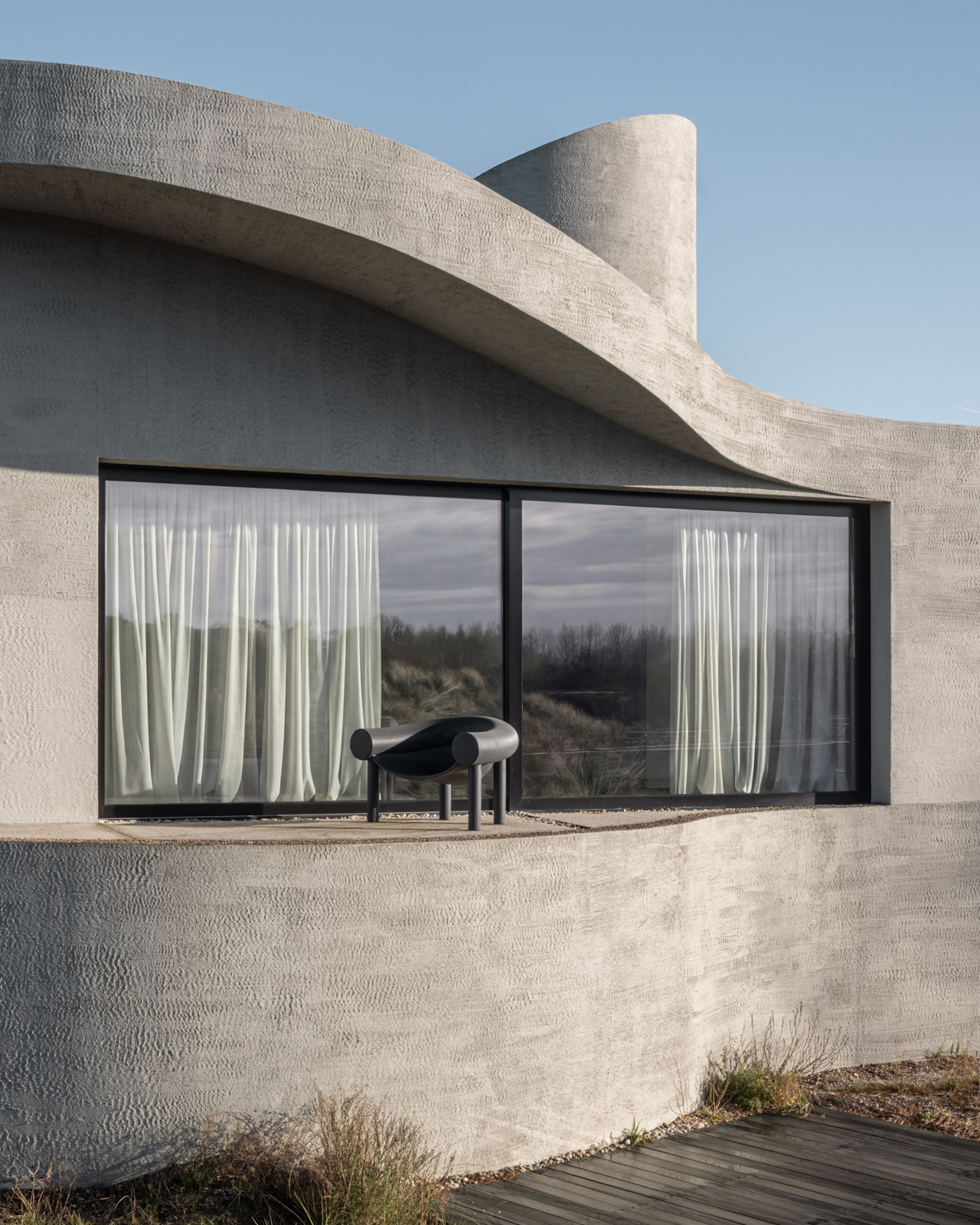
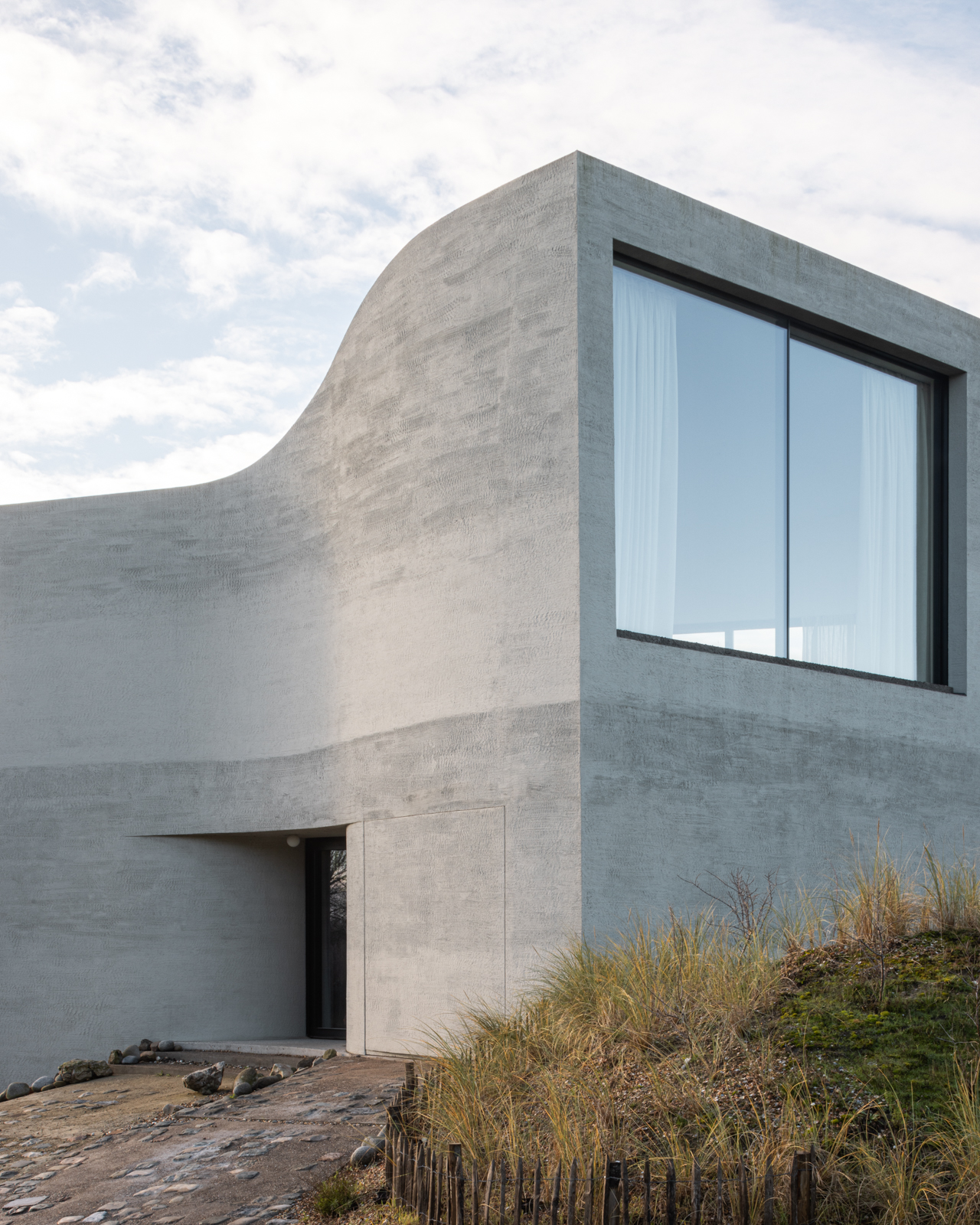
Located on a corner site at the edge of a protected dune reserve in Oostduinkerke, Villa Nouvelle Vague is conceived as a sculpted mass shaped by terrain, wind and light.
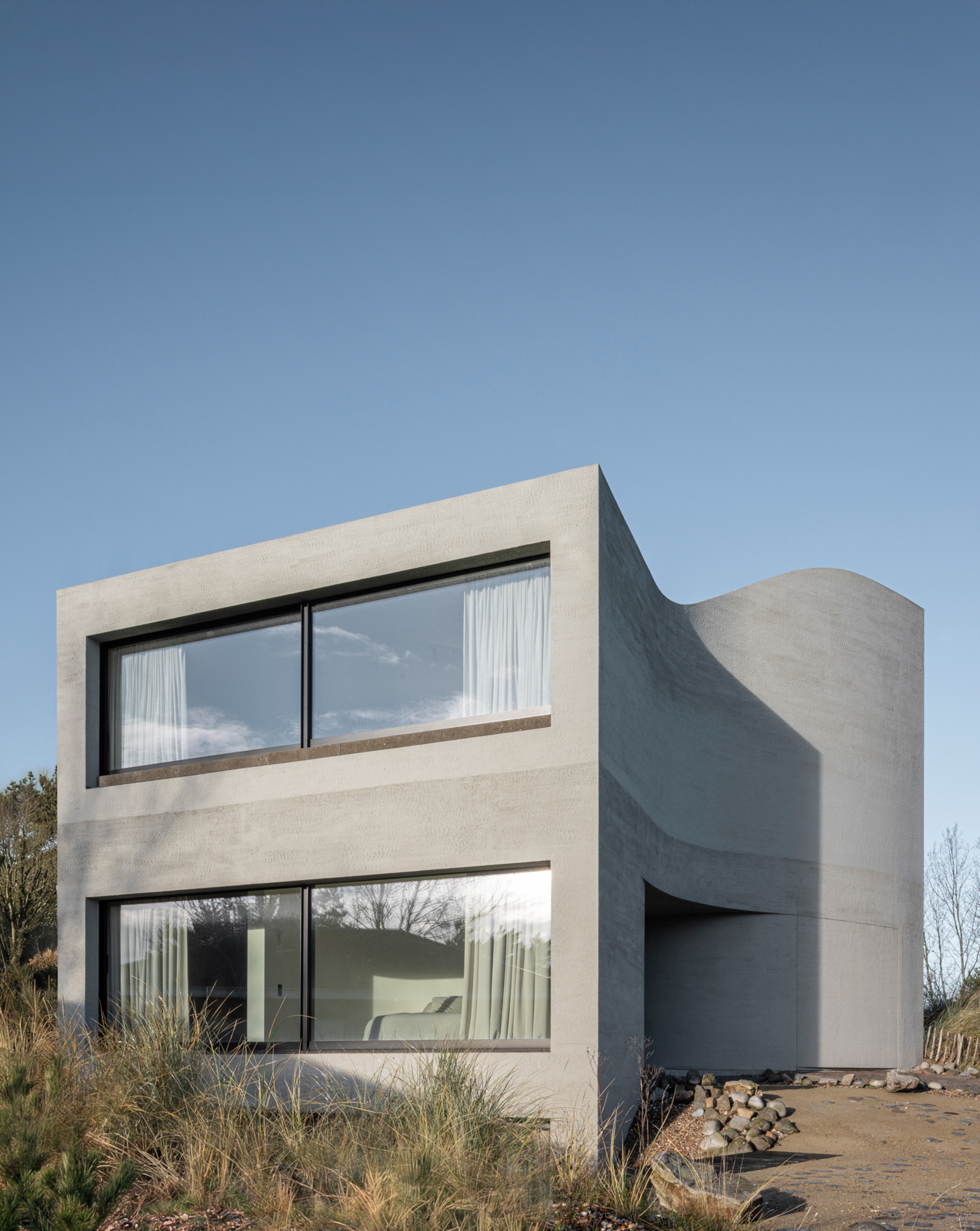
The volume narrows toward the rear of the plot, allowing the house to settle freely within its site and creating a generous garden. This subtle geometry also enables sunlight to reach both the southern and western façades — wrapping the building in light throughout the day.
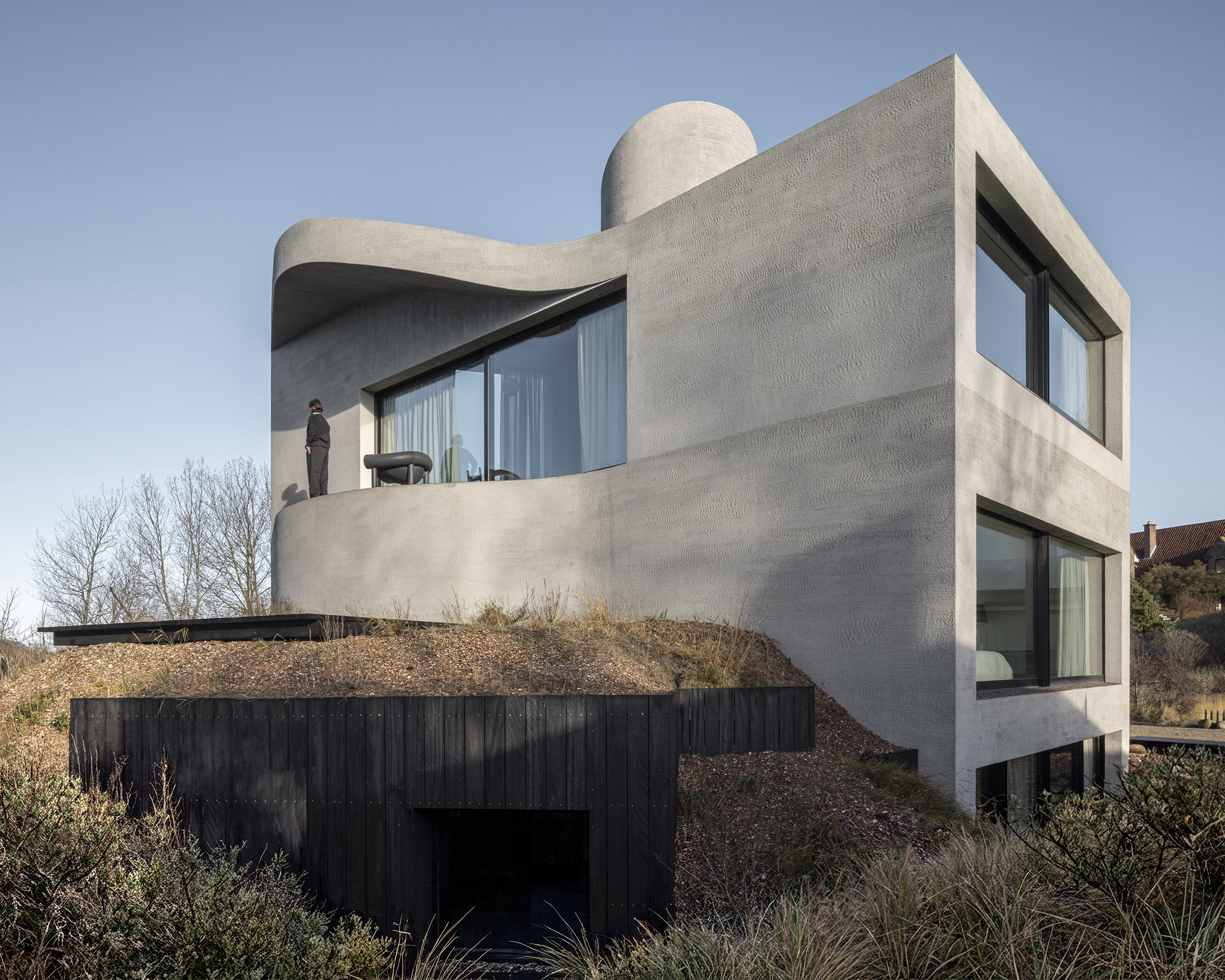
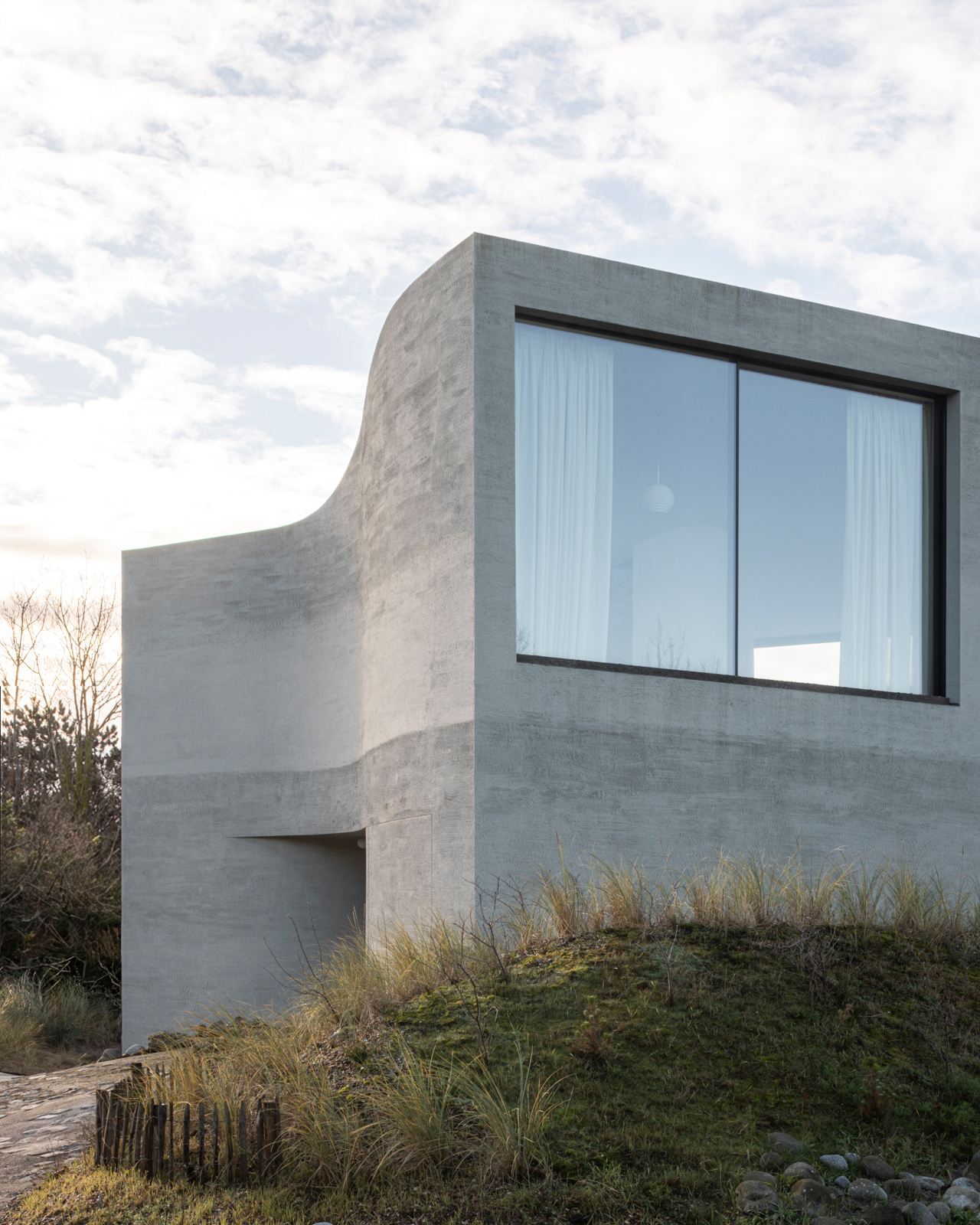
Toward the street, the curved façade acts as a protective shell. Its horizontal texture recalls sand at low tide, as if the concrete were sedimented rather than cast. To the south, a deep horizontal incision frames the landscape through thickness and shadow rather than transparency.
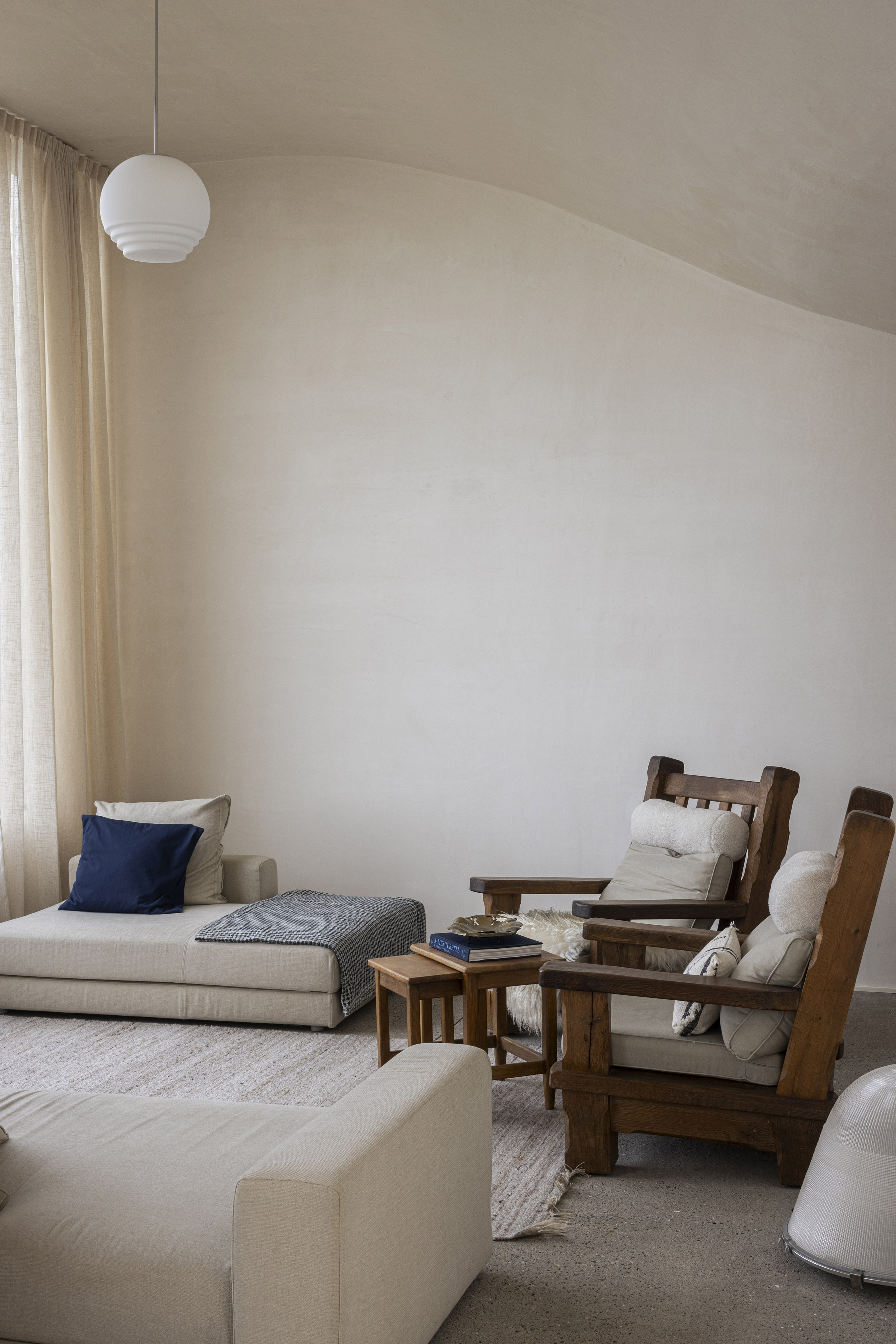
Partly embedded in the ground, the house reads as carved into the dune rather than placed upon it. The sloping roof is generated by interior spatial conditions, rising above the living space and descending toward more intimate zones.
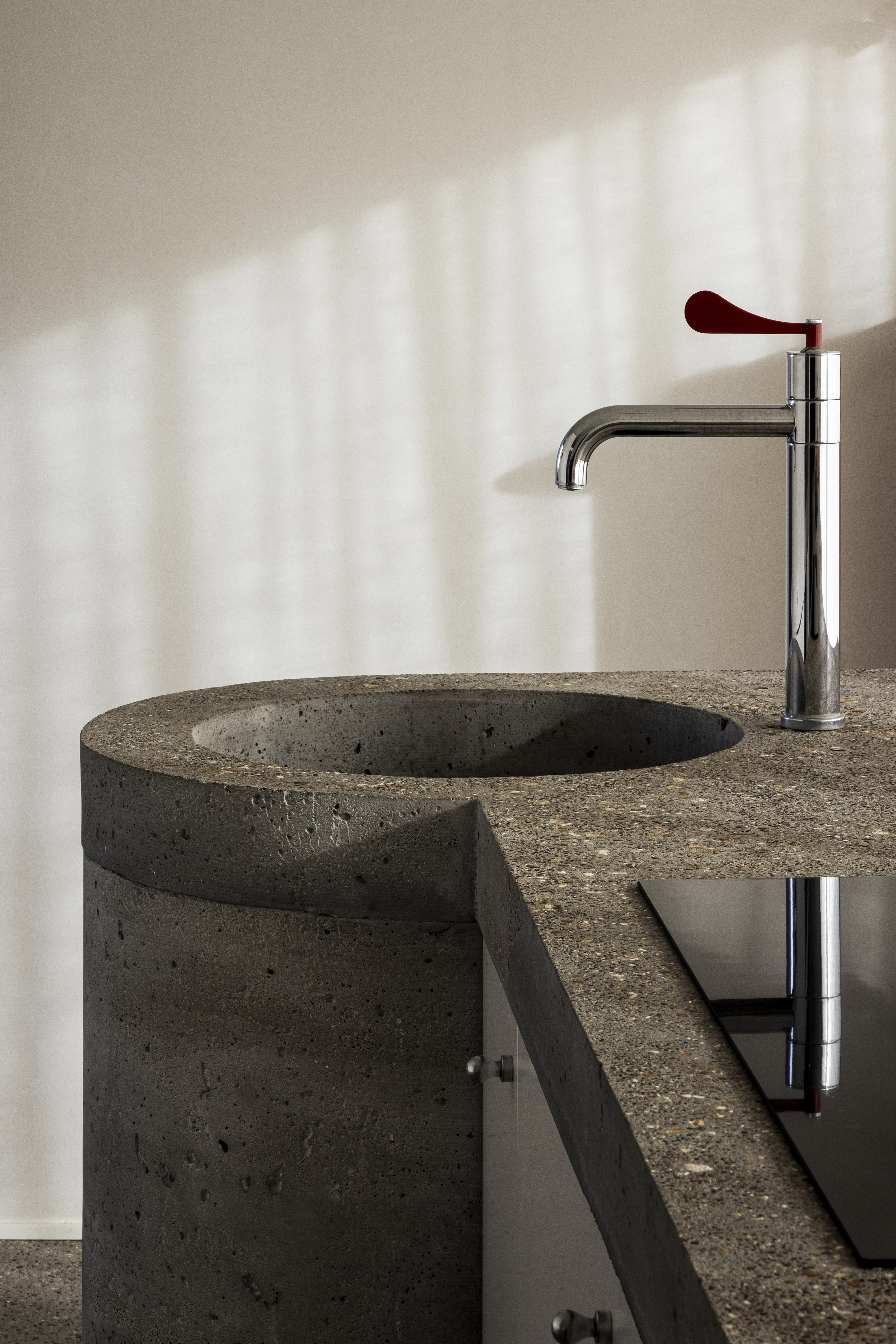
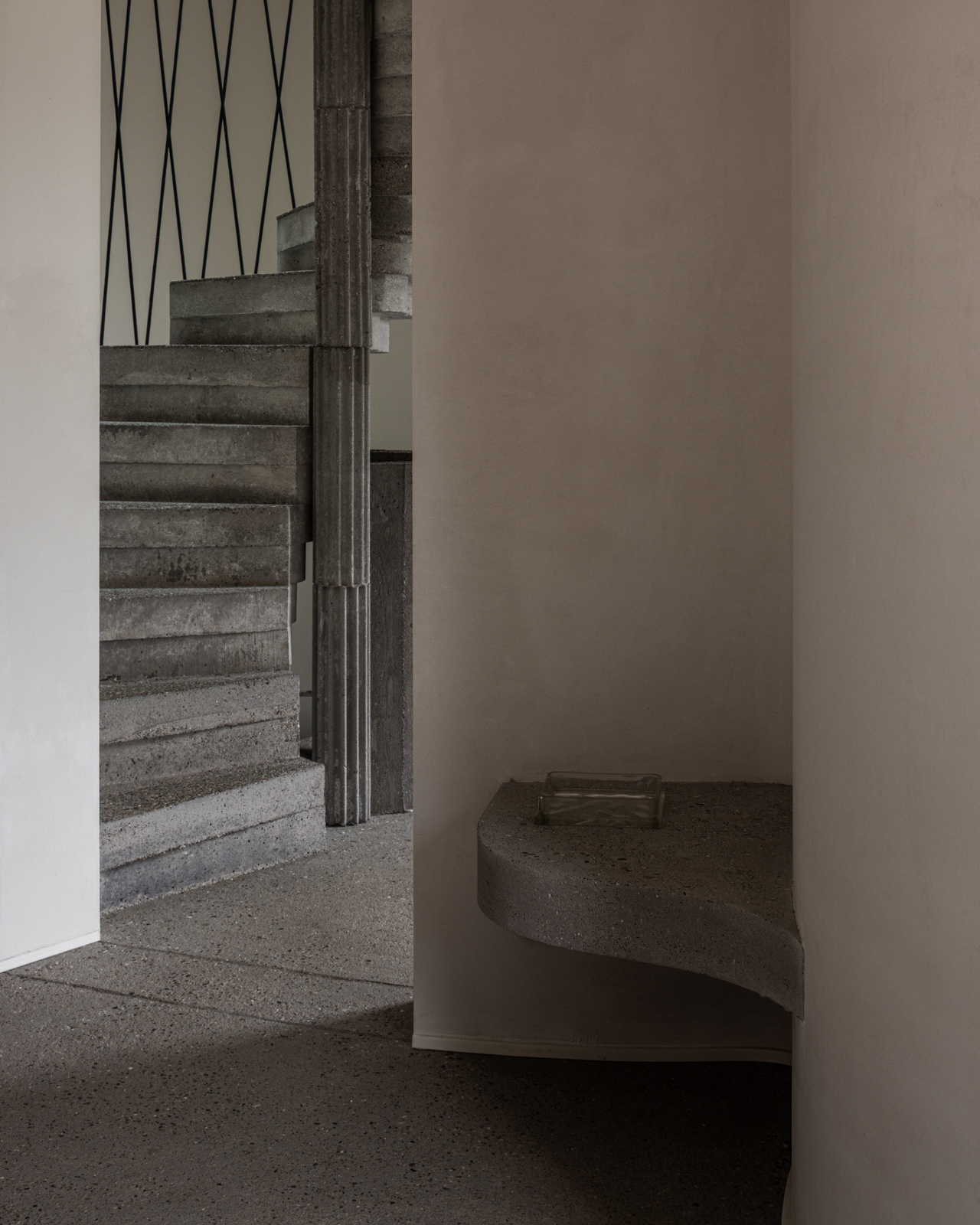
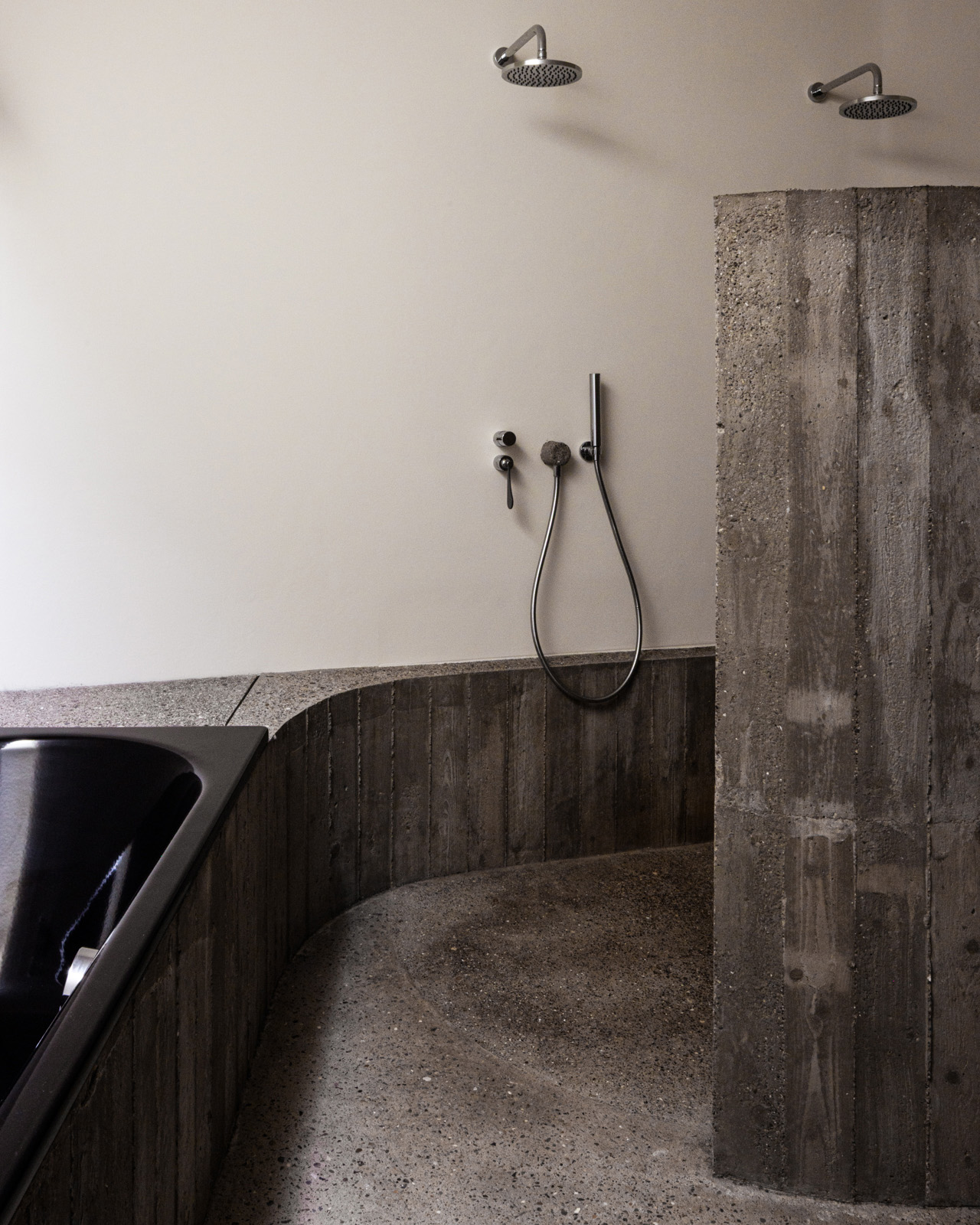
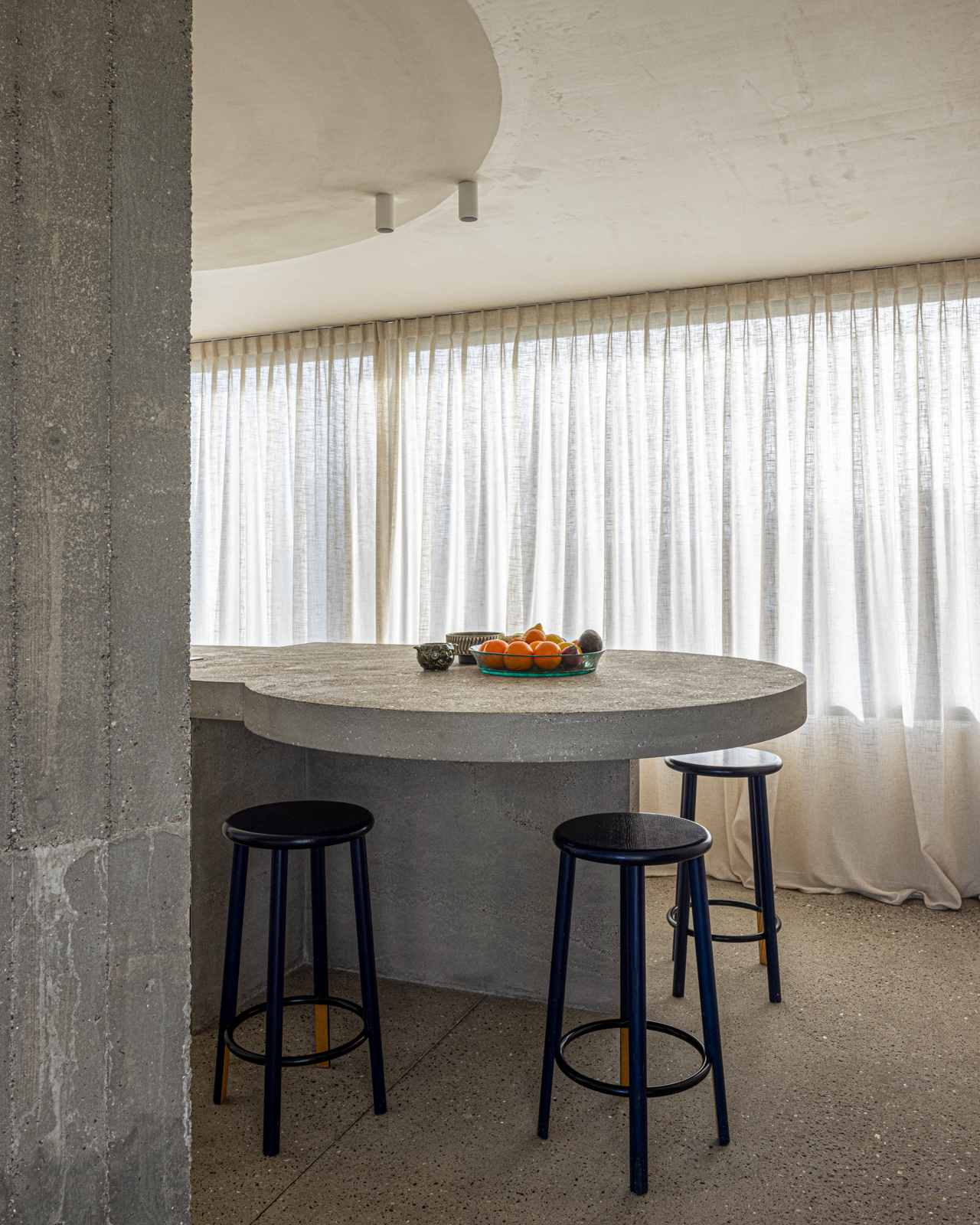
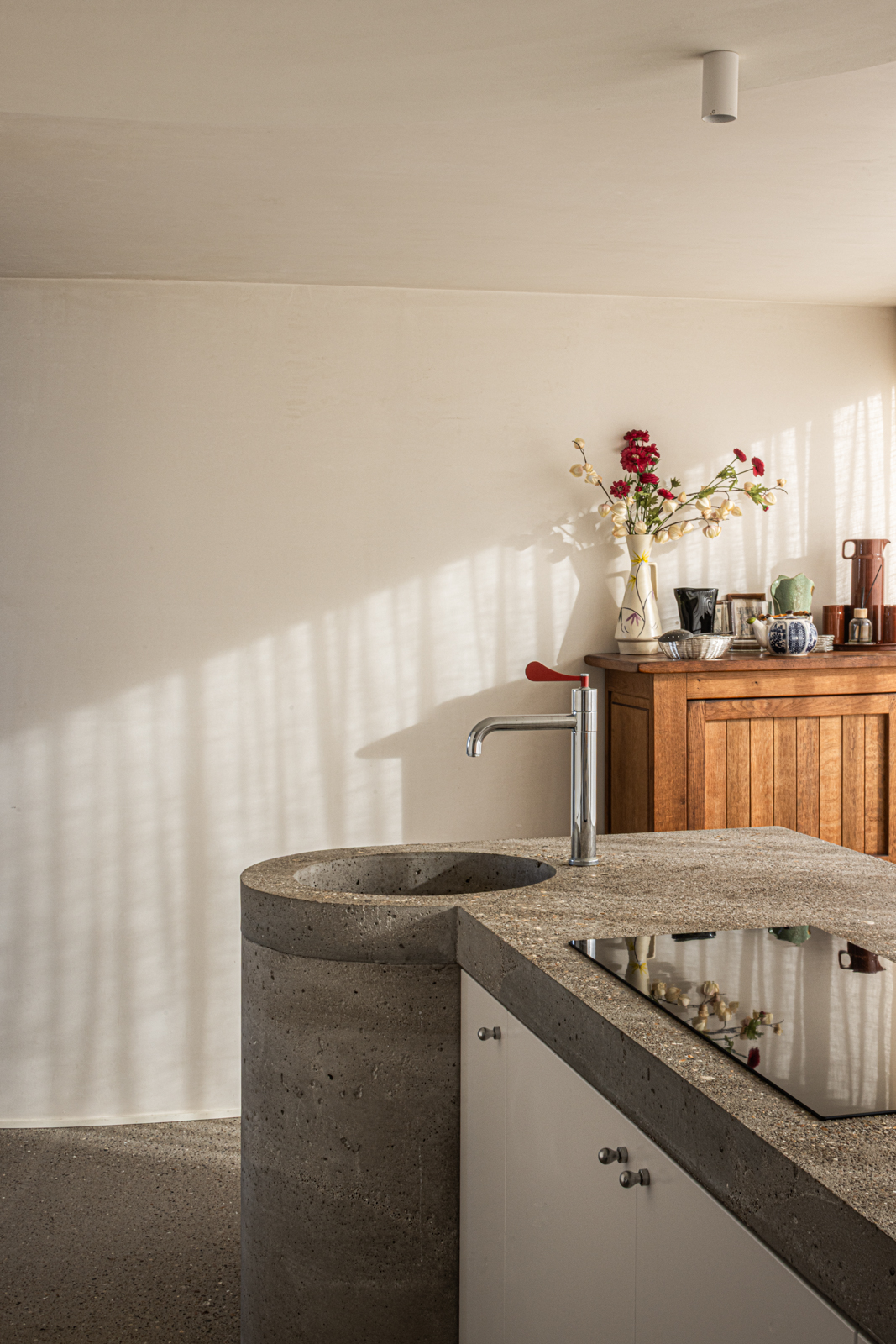
Inside, concrete continues as spatial substance. Staircase, bathrooms, kitchen and built-in seating are conceived as monolithic elements within the mass. Lime-washed surfaces and sandblasted oak furniture soften the mineral presence while maintaining material clarity.
The spatial concept and structural intelligence were developed simultaneously, resulting in a monolithic construction where method remains invisible.
This project was developed through the integrated D/S™ methodology, where spatial intent and structural intelligence evolve as one.
photo credits: Tim Van de Velde